

 Lietuvių
 Latviešu
 Discounts
 Immunity
 Digestion and intestine
 Heart and blood flow
 Bones and joints
 Nervous system
 Muscles
 Energy
 Weight control
 Beauty
 Pain and inflammation
 Mental activity
 Overall health
 Matcha and tea
 Longevity
 Harmonious life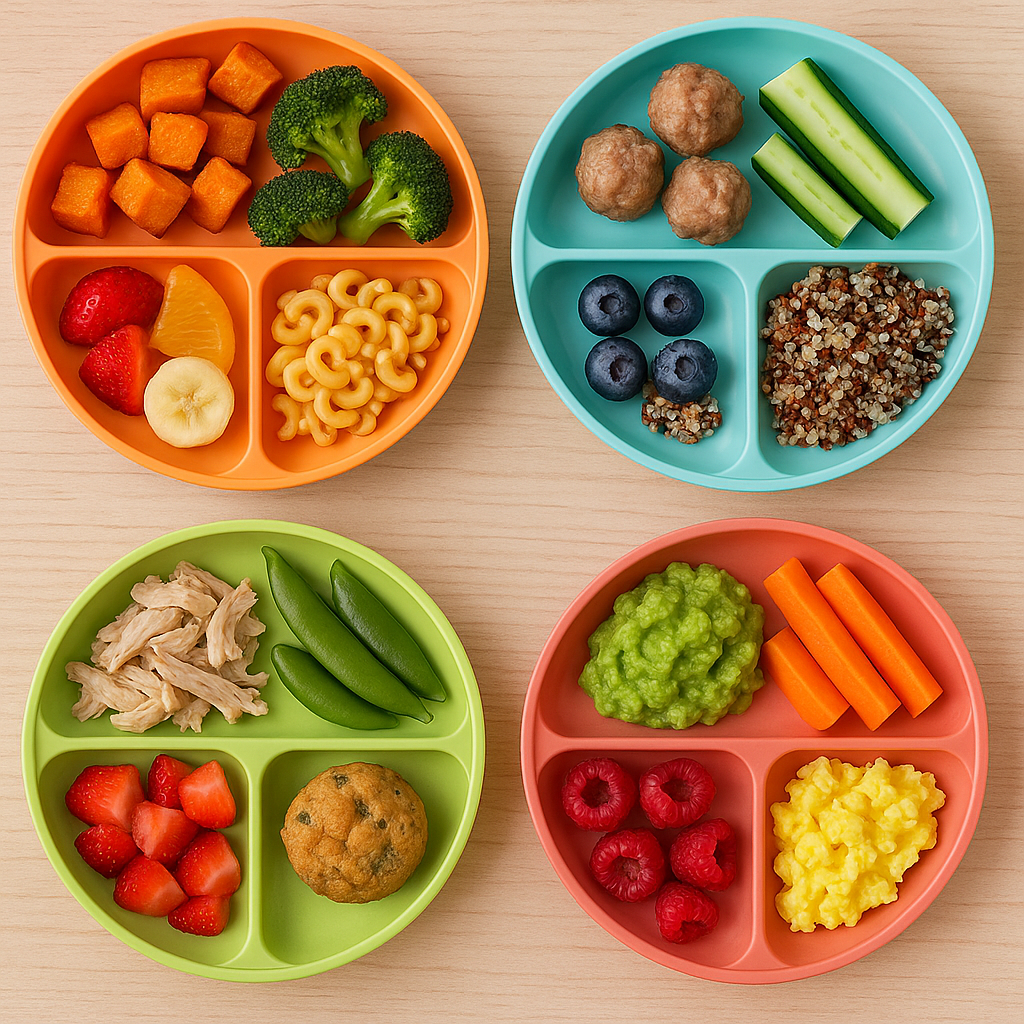
As children cross the threshold of their first birthday, a new stage of nutrition opens up, full of new discoveries and important decisions for parents. At this age, eating habits are formed that can last a lifetime, so proper nutrition is extremely important for a child’s development, growth and overall health. A variety of foods not only provide the necessary nutrients, but also strengthen the immune system, help develop the brain, bones and muscles.
In this article, you will learn about the basic principles of healthy nutrition for babies from 1 year old, optimal foods and their quantities, how to develop correct eating habits, solve the most common feeding problems, and find practical advice and examples of a weekly menu. All this will help you ensure that your baby receives a complete, balanced diet necessary for healthy growth.
Basic principles of healthy nutrition for children 1-3 years old
Proper nutrition for toddlers is based on several important principles that help ensure that the child receives all the necessary nutrients and develops healthy eating habits.
Why balanced eating habits are important
According to pediatric dietitians, the first three years of life are critically important in forming the foundations of healthy nutrition. Specialists from the Pediatric Clinic of the Lithuanian University of Health Sciences emphasize that at this age, children not only grow rapidly, but also learn basic eating skills. A properly balanced diet helps ensure optimal development, strengthen the immune system and form healthy habits for the future.
Key principles to consider:
- Variety – offer a variety of foods from different food groups
- Regularity – feed your child at regular intervals
- Food safety – ensure that the food is safe and suitable for your child
- Age-appropriate portions – monitor your child and adapt to their needs
- Parental example – set a good example by eating together
- Involvement – allow your child to participate in food preparation and selection
A healthy diet for children from 1 year of age should not be too restrictive – it is important to maintain a balance between nutrition and enjoyment. Parents should understand that children naturally have their own eating patterns and that each child’s needs are different.

The main rule is that parents are responsible for WHAT and WHEN to offer their child, and the child is responsible for IF and HOW MUCH to eat.
Food groups and portion recommendations
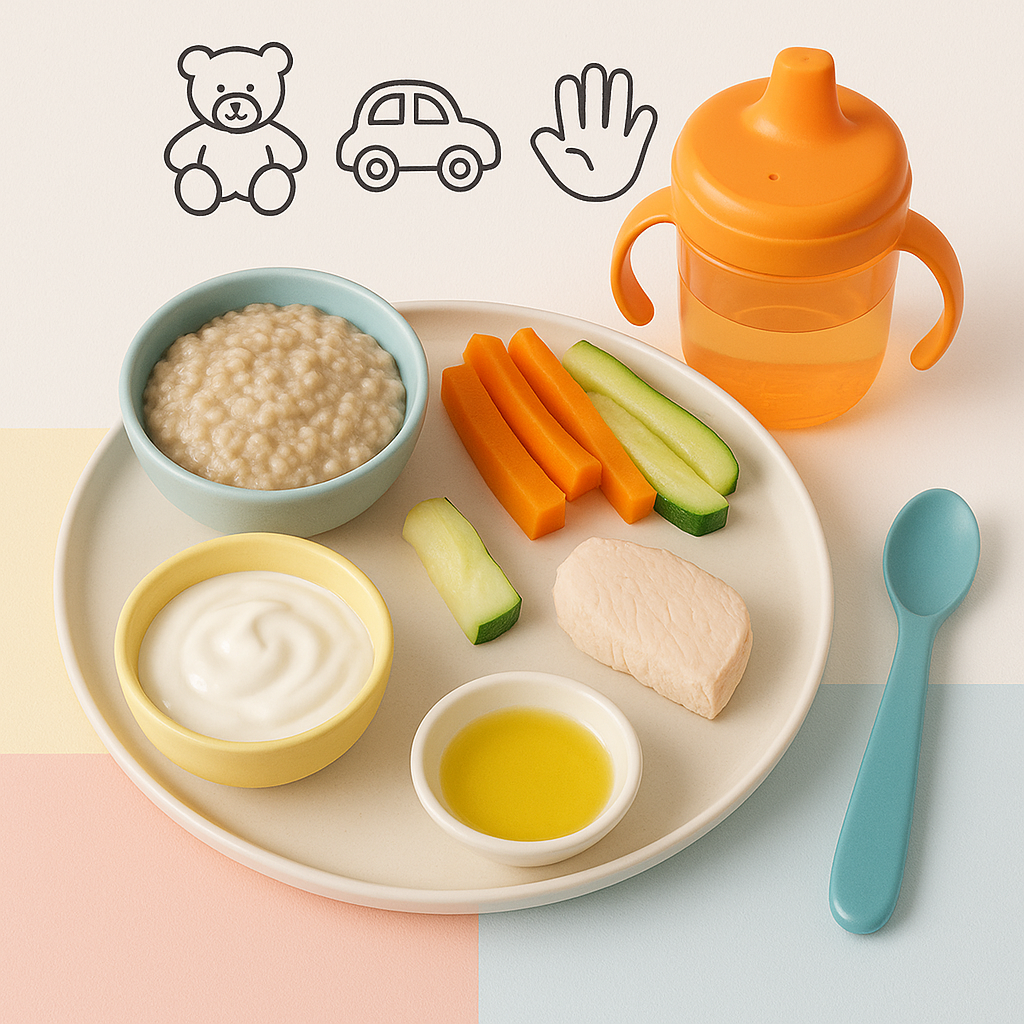
When creating a balanced diet plan for your toddler, it is important to include all the main food groups and know what portions are appropriate for their age.
Grains
- Recommended: 3-4 servings per day
- Sample servings: 1/4 – 1/2 slice of bread, 2-4 tbsp. porridge, 1/4 cup pasta
- Tips: choose whole grains, avoid refined grains
Vegetables and fruits
- Recommended: 3-4 servings of fruit and 3-4 servings of vegetables
- Sample servings: 1-2 tbsp. cooked vegetables, 1/4 small apple, 1-2 tbsp. berries
- Tips: offer vegetables and fruits of different colors, prioritize seasonal ones
Protein products
- Recommended: 2-3 servings per day
- Sample servings: 30-50 g of cooked meat or fish, 1 egg, 2-3 tbsp. tablespoons of cooked legumes
- Tips: choose lean meat, fish at least once a week, legumes
Dairy products
- Recommended: 2-3 servings per day
- Sample servings: 100-150 ml of milk, 100 g of yogurt, 20-30 g of cheese
- Tips: after 1 year, regular cow’s milk can be used, choose natural, unsweetened dairy products
Fats and oils
- Recommended: small amounts of quality fats
- Examples: a teaspoon of butter or oil in dishes, avocado slices
- Tips: use cold-pressed olive oil, sometimes include nut butter (after 2 years)
Drinks
- Recommended: water – the main drink, about 800-1000 ml per day (with meals)
- Tips: avoid sweetened drinks, limit fruit juice to 100 ml per per day
- Sample daily menu for children 1-2 years old
Breakfast:
- Oatmeal porridge with mashed berries
- Kefir
- Water
Lunch snack:
- Apple slices with natural yogurt
- Water
Lunch:
- Stewed vegetables with chicken
- Whole grain bread
- Water
Afternoon snack:
- Homemade cottage cheese curds
- Seasonal fruits
- Water
Dinner:
- Vegetable soup
- Egg roll
- Water or chamomile tea
It is important to remember that children’s nutrients must be balanced – the diet plan of children 1-3 years old should be rich in protein, calcium, iron, zinc and vitamins A, C, D. It is especially important to ensure sufficient iron, as its deficiency can disrupt the child’s development. If your little one has problems with digestion, you can consult a doctor about natural supplements for digestion and intestines.
Developing healthy eating habits and independence
At the beginning of their second year of life, toddlers begin to actively seek independence, and this is especially evident during mealtime. This stage is a great opportunity to develop healthy eating habits that will be useful throughout life.
A child’s independence in eating is an important developmental stage. Let your toddler:
- use appropriately sized cutlery (special spoons, forks)
- drink from a training cup
- participate in simple food preparation (wash fruit, mix)
- choose from several healthy food options
- eat together with the family at a common table
Eat together with your child and set a positive example – this is one of the strongest ways to form healthy eating habits.

When a child sees their parents enjoying a variety of foods, they are more likely to want to try new foods.
Encouraging curiosity helps overcome many eating challenges:
- Introduce new foods one at a time, alongside the ones they already like
- Talk about the colors, shapes, and textures of food
- Let your child touch, smell, and explore the food
- Don’t force them to taste – offer the same food 10-15 times on different occasions
Avoid digital devices, television, or other distractions during mealtimes. This prevents your child from focusing on food and recognizing hunger and satiety signals. The goal is to make eating a pleasant social experience, not just about getting nutrients.
How to reduce sugar and salt intake:
- Read product labels and choose those that do not contain added sugar
- Instead of sweets, offer fruit as dessert
- Do not use added salt in cooking dishes until the age of 2
Enrich the taste with herbs and spices, not salt
Respected Lithuanian dietitian Edita Gavelienė notes that “children under 3 years old should not consume more than 2 g of salt per day, and the amount of sugar should not exceed 19 g (about 5 teaspoons)”. At this age, toddlers’ taste buds are more sensitive than adults, so they naturally enjoy more subtle flavors.
If your child has digestive problems or is a picky eater, pediatricians sometimes recommend probiotics, good bacteria, as a way to maintain intestinal health and improve food absorption.
Common Problems and Practical Solutions
Parents face a variety of problems when feeding their toddlers, which can often be solved with simple but effective solutions. Here are some common situations and recommendations:
Frequent eating
Causes: normal developmental stage, desire for control, sensitivity of taste receptors, previous negative experiences.
Solutions:
- don’t use pressure or punishment – this will only reinforce the negative association with food
- offer the same food regularly, but don’t force it
- involve your child in meal preparation
- eat together and set a positive example
- introduce new foods alongside the ones they already like
Poor appetite
Causes: natural growth slowdown after 1 year, striving for independence, distractions while eating.
Solutions:
- Keep a regular meal schedule with 3 main meals and 2-3 snacks
- Limit drinks before meals
- Offer smaller, more nutritious portions
- Remove distractions while eating
- Let your child feel hungry – don’t force them to snack constantly
Overeating
Causes: inability to recognize satiety signals, emotional eating, excessive parental pressure.
Solutions:
- Teach your child to recognize satiety signals
- Serve smaller portions, let them ask for more
- Don’t reward or punish with food
- Don’t join the “clean plate” club – let your child stop when they’re full
Constipation
Causes: too little fluid, lack of fiber, too much dairy, lack of physical activity.
Solutions:
- increase fluid intake (water, unconcentrated juices)
- offer foods rich in fiber (fruits, vegetables, whole grains)
- limit dairy to recommended intake
- encourage physical activity
Allergies and intolerances
Causes: immune system reaction to proteins (allergy) or lack of specific enzymes (intolerance).
Solutions:
- monitor and record reactions after certain products
- give newly introduced potential allergens in the morning to allow time for observation
- seek a doctor for an accurate diagnosis
- if an allergy is confirmed, learn to read labels and find substitutes
Common illnesses and childhood immunity
Causes: it is normal for children to get mild infections 6-8 times a year, developing immune system, team.
Solutions:
- Ensure adequate vitamin and mineral intake through a variety of foods
- Include foods containing prebiotics (bananas, onions, garlic)
- Limit sugar intake, which weakens immunity
- Consult your doctor about vitamin D supplements during the cold season
Children’s immunity and nutrition are closely related – proper nutrition strengthens the body’s resistance to disease. Foods rich in vitamin C (citrus fruits, berries), vitamin A (carrots, sweet potatoes), zinc (lean meat, legumes) and iron (meat, eggs, green leafy vegetables) are especially important.
If you want to learn more about dairy products for babies and their impact on health, read our detailed information in a special section.
Weekly Meal Plans and Recipes
When creating a menu for children aged 1 and up, it is important to ensure variety and a balanced diet. Here is a weekly meal plan that you can adapt to your little one’s needs and family habits.
Monday
- Breakfast: Oatmeal with mashed strawberries and a spoonful of butter
- Lunch: Apple slices with natural yogurt
- Lunch: Vegetable and chicken stew, buckwheat porridge, cucumber sticks
- Dinner: Cottage cheese with bananas
- Dinner: Zucchini and potato cutlets, kefir
Tuesday
- Breakfast: Eggs, whole grain bread, tomato slices
- Lunch: Homemade cottage cheese without sugar
- Lunch: Pureed pumpkin soup, lentil cutlets
- Dinner: Apple and pear puree
- Dinner: Rice porridge with chicken meatballs, boiled carrots
Wednesday
- Breakfast: Buckwheat porridge with apples and cinnamon
- Lunch: Homemade yogurt with berries
- Lunch: Braised lean beef with vegetables, mashed potatoes
- Supper: Whole grain crackers with avocado spread
- Dinner: Cottage cheese casserole with natural yogurt
Thursday
- Breakfast: Corn porridge with milk, mashed berries
- Lunch: Soft fruit pieces (peaches, bananas)
- Lunch: Fish stew with vegetables, barley porridge
- Supper: Homemade sugar-free muffins with cottage cheese and apples
- Dinner: Vegetable omelette, fresh vegetables
Friday
- Breakfast: Whole grain porridge with butter and grated apple
- Lunch: Mashed berries with natural yogurt
- Lunch: Turkey meatballs, brown rice, stewed vegetables
- Supper: Banana and avocado smoothie
- Dinner: Vegetable soup, whole grain bread with butter
Saturday
- Breakfast: Homemade pancakes with cottage cheese
- Lunch: Pear and apple slices
- Lunch: Stewed vegetables with beans, whole grain pasta
- Dinner: Baked apple slices with cinnamon
- Dinner: Cottage cheese and potato fingers, vegetable sticks
Sunday
- Breakfast: Oven-baked oatmeal with fruit
- Lunch: Homemade cottage cheese mass with berries
- Lunch: Baked chicken with vegetables, couscous
- Dinner: Homemade ice cream made from yogurt and pureed berries
- Dinner: Zucchini pancakes, fresh vegetable salad
Quick and healthy snacks for toddlers
- avocado slices
- boiled egg
- homemade hummus with vegetables
- cottage cheese with pureed berries
- homemade granola with yogurt
- apples with peanut butter (ages 2 and up)
- corn tortillas with guacamole
- mini sandwiches with vegetables and lean meat
Healthy snacks for kids should not only be nutritious, but also fun.
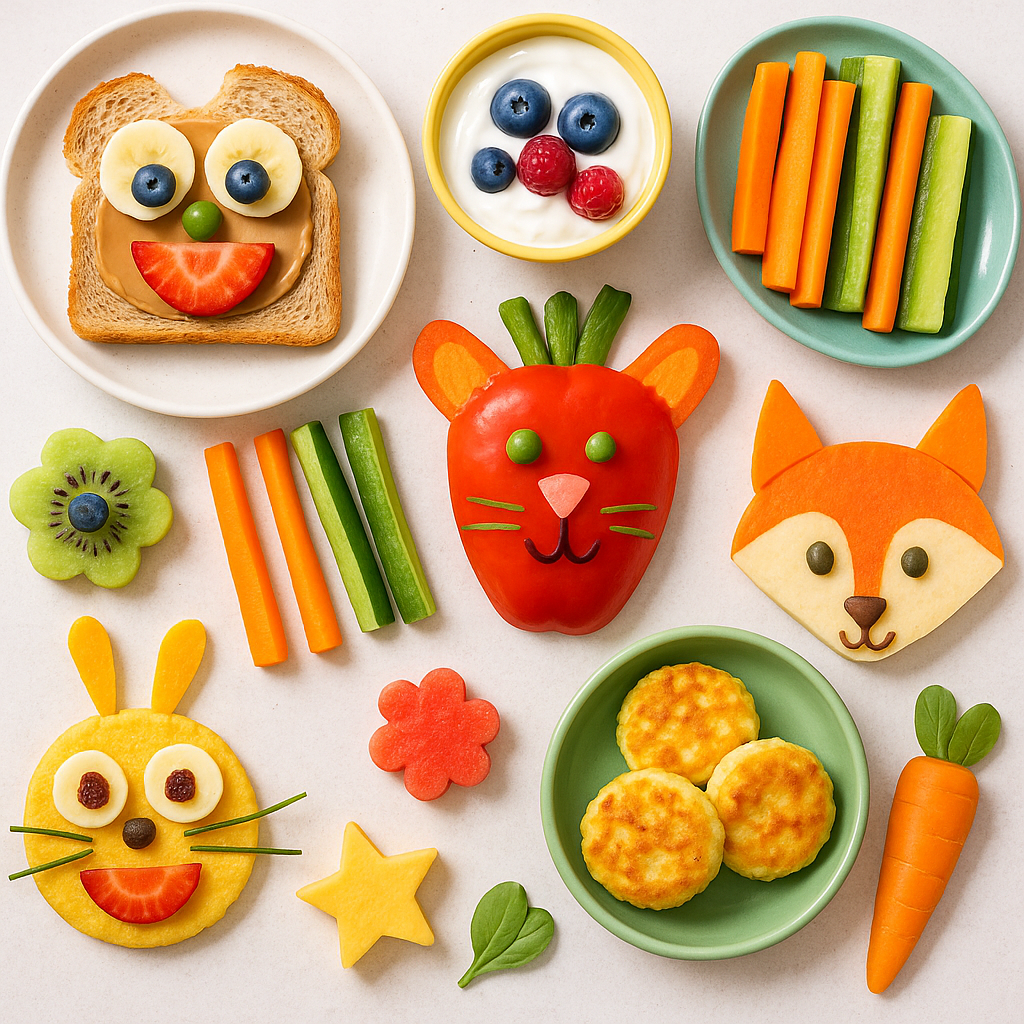
Try to present food in a colorful way, make funny faces or figures. Children like to eat what looks attractive!
Pediatricians recommend including the best fats for children in their diet, such as fish, avocados and olive oil, which are essential for normal brain development.
Do not forget that vitamin D is especially important for a growing body, so in the darker season, consult your doctor about the need for supplements, especially if your child does not eat enough fish and other sources of this vitamin.
Summary
Nutrition of babies from 1 year of age is a new stage for both children and parents. Healthy eating habits formed in early childhood can become an excellent foundation for life. The most important thing on this path is patience, consistency and a positive example.
A balanced diet that includes all the main food groups – cereals, vegetables and fruits, proteins, dairy products and healthy fats – ensures optimal growth and development of the child. Let your little one explore a variety of foods, discover new tastes and textures at their own pace, without pressure.
Remember that every child is an individual, so their eating habits and pace may vary. It’s not about quantity, but about quality and a positive experience while eating. Eat together as a family, teach basic table manners and set a good example.
If you have specific questions or have encountered more serious problems with feeding your little one, we always recommend consulting a pediatrician or nutritionist, who will be able to provide personalized advice based on your child’s needs.
Frequently Asked Questions
What foods should a 1-year-old child avoid?
Avoid nuts, raw vegetables, honey, excess salt/sugar, whole grapes, unpasteurized cow’s milk (if the child is less than 1 year old), processed meats, and foods that can cause choking.
How often should a toddler eat per day?
3 main meals with 2-3 healthy snacks are recommended; regular intervals (every 3-4 hours).
How to deal with a picky 1-2-year-old child?
Be patient, repeatedly offer new foods, do not force food, set an example, involve the child in food preparation.
What are the main nutrients important for children 1-3 years old?
Essential nutrients: protein, iron, vitamin D, calcium, healthy fats, fiber, and water.
Should I give my child supplements (such as vitamin D or probiotics)?
Consult your pediatrician, but vitamin D and probiotics are sometimes recommended to improve immunity and digestion.